PG Electricity Bill Disputes: Sub-Meter Records and DISCOM Proof
A practical electricity-dispute workflow using meter readings, tariff evidence, itemised billing and SERC or DISCOM complaint routes.
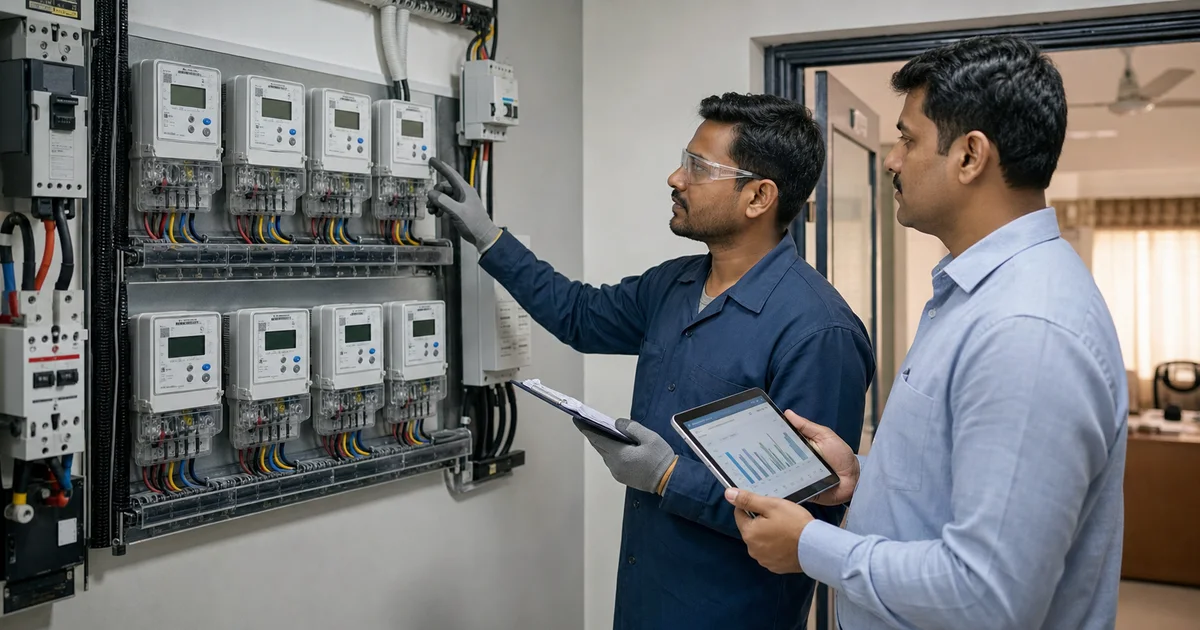
Electricity disputes in a PG usually involve one of four questions: which tariff applies, which meter records are reliable, how common-area or fixed charges were allocated, and whether the resident received an understandable calculation. Internal records can improve transparency, but they do not override the Electricity Act, applicable SERC regulations or DISCOM terms. This article remains pending advocate review.
Identify the Actual Billing Method
| Method | Records required | Common risk |
|---|---|---|
| Electricity included in occupancy charge | Agreement and rate card | Adding an unexplained extra bill later. |
| Main meter allocated across residents | DISCOM bill and written allocation method | Calling a simple average the official tariff. |
| Room sub-meter | Opening/closing readings, meter identity and calculation | Treating an internal meter as proof of regulatory approval. |
| Separate DISCOM connection | Official consumer bill and payment record | Mixing common-area charges without explanation. |
SERC and DISCOM Context
Electricity distribution and consumer grievance procedures are state-specific. Check the applicable State Electricity Regulatory Commission regulations, the local DISCOM tariff order, supply code and consumer-grievance route. Do not claim that a single internal sub-metering practice is legal across every state or tariff category.
Transparent Calculation Checklist
- Preserve the main DISCOM bill for the same billing period.
- Record meter serial/room identity and dated opening and closing readings.
- Show units consumed and the rate or allocation method separately.
- Explain fixed charges, taxes, common-area use and rounding.
- Credit prior payments and adjustments.
- Provide a correction and escalation channel.
Track Electricity Readings and Billing Records
Maintain supported meter readings, electricity bills and resident payment records without promising a dispute-free outcome.
Worked Illustration
If a room reading moves from 1,240 kWh to 1,315 kWh, recorded consumption is 75 kWh. Multiplying 75 by an agreed per-unit figure gives only one component. The final recoverable amount may also depend on the applicable tariff, fixed charges, common-area allocation, agreement and regulatory conditions.
A household-appliance load test can be an initial diagnostic, but appliance rating, voltage, power factor, wiring and meter specification affect the result. Use a qualified electrician and the approved meter-testing or grievance route for a formal dispute.
Dispute Escalation Record
| Stage | Evidence |
|---|---|
| Internal review | Agreement, readings, photos, bills and calculation |
| DISCOM complaint | Consumer number, complaint reference and official bill |
| Consumer grievance forum | Prior complaint, response and applicable procedure |
| Ombudsman or other route | Eligibility and sequence required by the applicable regulations |
RentTenant Capability Boundary
RentTenant supports configured room-level electricity readings, bills and resident payment records. It does not certify a meter, set a lawful tariff, replace a DISCOM/SERC grievance mechanism or guarantee dispute elimination.
Related RentTenant Guides
Meter records, maintenance complaints, final readings and payment ledgers should tell a consistent story.
Primary Official Sources
- Electricity Act, 2003 — Section 12 — India Code
- Electricity Act, 2003 — India Code
- Rules framed under the Electricity Act, 2003 — Ministry of Power
- Electricity (Rights of Consumers) Rules, 2020 — Ministry of Power
- Metering Regulations and amendments — Central Electricity Authority
- CEA Regulations Compendium — Central Electricity Authority
Legal and regulatory disclaimer: General operational information only. Verify the current SERC/DISCOM rules and obtain advocate review before publication.

About the Author
Shilpi Shukla
Shilpi Shukla has 7 years of experience in rental property, hostel, PG, and tenant management. She shares practical insights to help property owners simplify operations, improve tenant experiences, and grow their rental business with RentTenant.