Tenant Not Paying Rent in India: Recovery and Eviction Steps
Practical steps to document rent arrears, issue notices and pursue lawful recovery or eviction without unsafe self-help measures.

Dealing with a tenant or PG resident who refuses to pay rent while continuing to occupy your property is every landlord's worst operational nightmare.
Whether a tenant makes constant excuses every month, ignores digital invoices, or flatly refuses to clear accumulated rent arrears, non-payment of rent directly undermines your property's cash flow, mortgage payments, and maintenance budgets.
Frustrated property owners often react impulsively—cutting off electricity or water, locking the room door, or throwing the resident's personal belongings outside. Coercive self-help can expose an owner to civil or criminal proceedings depending on the act and applicable law. Use the lawful possession and recovery process instead.
What are your exact legal rights when a tenant defaults on rent in India? How does the Model Tenancy Act 2021 govern rent defaults? How can you fast-track rent recovery using an Order 37 CPC Summary Suit?
This article explains the legal framework for rent non-payment, a structured 4-Stage Landlord Action Plan, legal eviction procedures, security deposit offset calculations, and how property management platforms like RentTenant automate rent collection and default notice tracking.
Table of Contents
- Legal Framework for Non-Payment of Rent in India
- Ground for Eviction Under Model Tenancy Act 2021
- PG Leave & License Contract Default Rules
- Dangerous "Self-Help" Mistakes Landlords MUST Avoid
- Disconnecting Utility Supplies (Electricity/Water)
- Forcible Lockouts & Luggage Seizure
- Order 37 CPC: Fast-Track Summary Suit for Rent Recovery
- How to Recover Liquidated Rent Arrears in 90 Days
- Step-by-Step 4-Stage Landlord Action Plan
- Stage 1: Automated Reminders & Grace Period
- Stage 2: Formal Notice of Default & Demand for Rent
- Stage 3: Advocate Legal Notice to Quit
- Stage 4: Eviction Suit & Order 37 CPC Filing
- Calculating Security Deposit Offset & Arrears
- Automating Rent Collection & Default Prevention with RentTenant
- Frequently Asked Questions (FAQs)
Legal Framework for Non-Payment of Rent in India
Before initiating legal action, landlords must understand the statutory provisions governing rent defaults under Indian law.
Model Tenancy Act (MTA) 2021 Eviction Benchmark
The Model Tenancy Act is a model, not automatically binding nationwide. Non-payment remedies and cure periods depend on the law enacted in the relevant state, the agreement and the competent forum.
- The landlord is entitled to apply before the local Rent Authority / Rent Tribunal for an eviction decree.
- Upon order execution, the landlord can also claim double the monthly rent as compensation for unauthorized occupation post-default.
PG Accommodations (Leave & License Agreements)
In a Paying Guest accommodation governed by a Leave and License Agreement under the Indian Contract Act, 1872:
- Rent payment on the agreed due date is a fundamental condition of the license.
- Non-payment of rent constitutes an immediate contractual breach, granting the PG owner the legal right to terminate the license upon serving notice.
Dangerous "Self-Help" Mistakes Landlords MUST Avoid
Faced with a non-paying tenant, taking the law into your own hands can turn you from an aggrieved landlord into an accused party under Indian criminal law.
+-------------------------------------------------------------------+
+-------------------------------------------------------------------+
|  ILLEGAL SELF-HELP (CRIMINAL RISKS)   |  LEGAL DUE PROCESS        |
|  - Cutting off water or electricity    |  - Send automated WhatsApp|
|  - Changing door locks forcibly       |    rent reminders         |
|  - Throwing resident luggage outside  |  - Issue Formal Default   |
|  - Physical intimidation / verbal abuse|    Notice (15-day cure)   |
|  - Seizing personal original IDs      |  - Issue Advocate Legal   |
|                                       |    Notice to Vacate       |
|                                       |  - File Order 37 CPC Suit |
|                                       |    or Rent Tribunal Case  |
+-------------------------------------------------------------------+
Why Self-Help Remedies Backfire:
- Cutting Off Water or Electricity: Violates Section 430 IPC (mischief). Tenants can approach court to obtain emergency restoration injunctions against the landlord.
- Forcibly Changing Locks / Lockouts: Constitutes wrongful restraint under Section 339 IPC.
- Seizing Personal Belongings: Can lead to criminal charges of theft (Section 378 IPC) or extortion.
Order 37 CPC: Fast-Track Summary Suit for Rent Recovery
One of the biggest hurdles landlords face is the length of standard civil lawsuits. However, for recovering liquidated rent arrears, the Code of Civil Procedure (CPC) Order 37 offers a fast-track legal remedy.
What is an Order 37 Summary Suit?
Order 37 CPC provides a summary judicial procedure specifically designed for recovering fixed debts based on written contracts (such as signed Rent Agreements or Leave & License contracts).
Why Order 37 CPC Works Faster Than Regular Suits:
- No Automatic Right to Defend: The defaulting tenant (defendant) does not get an automatic right to contest the case. They must apply to the court for "Leave to Defend" within 10 days of receiving summons.
- Strict Judicial Scrutiny: If the tenant fails to present a genuine, valid defense for non-payment, the court immediately passes a Summary Judgment directing the tenant to pay all rent arrears, late fees, and legal expenses.
Step-by-Step 4-Stage Landlord Action Plan
Follow this structured 4-stage roadmap to resolve rent non-payment professionally:
Stage 1: Automated Reminders & Grace Period (Days 1–5)
- Provide a standard 3 to 5 day grace period post rent due date.
- Send automated WhatsApp & SMS payment reminders containing UPI/card payment links via RentTenant.
- Apply contractually agreed daily late fee ledgers (e.g., ₹100/day).
Stage 2: Formal Notice of Default & Demand for Rent (Day 10)
- Send a formal written "Notice of Default & Demand for Rent" giving a 15-day cure period.
- State clearly that failure to pay will result in agreement termination, security deposit forfeiture, and eviction proceedings.
Automate Rent Collection & Eliminate Defaults with RentTenant
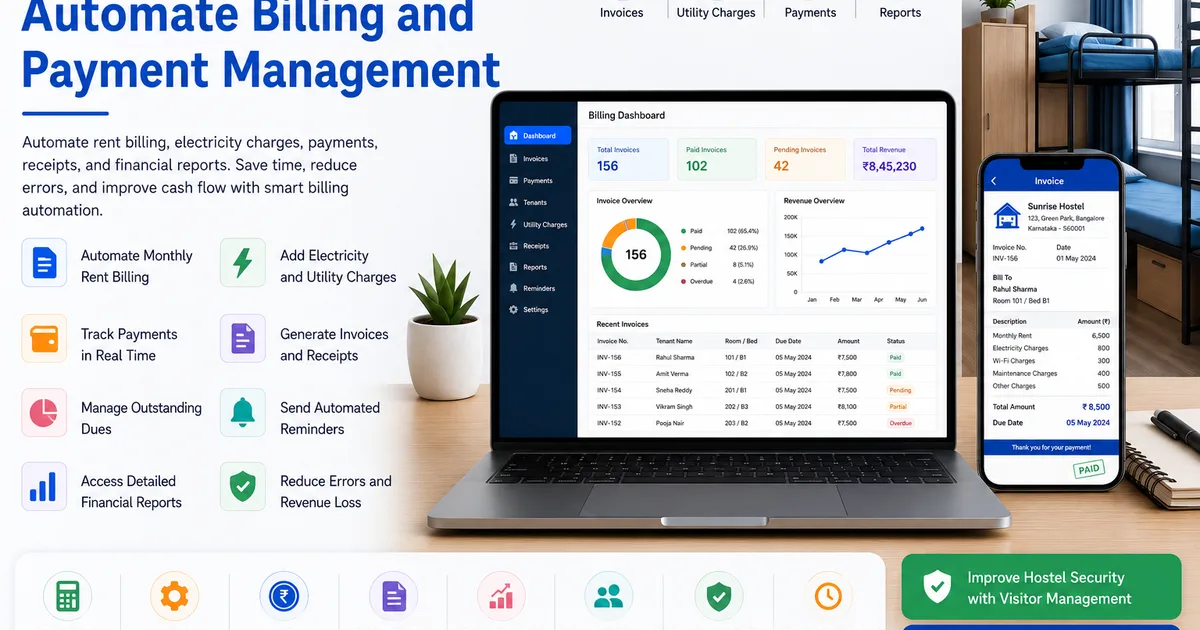
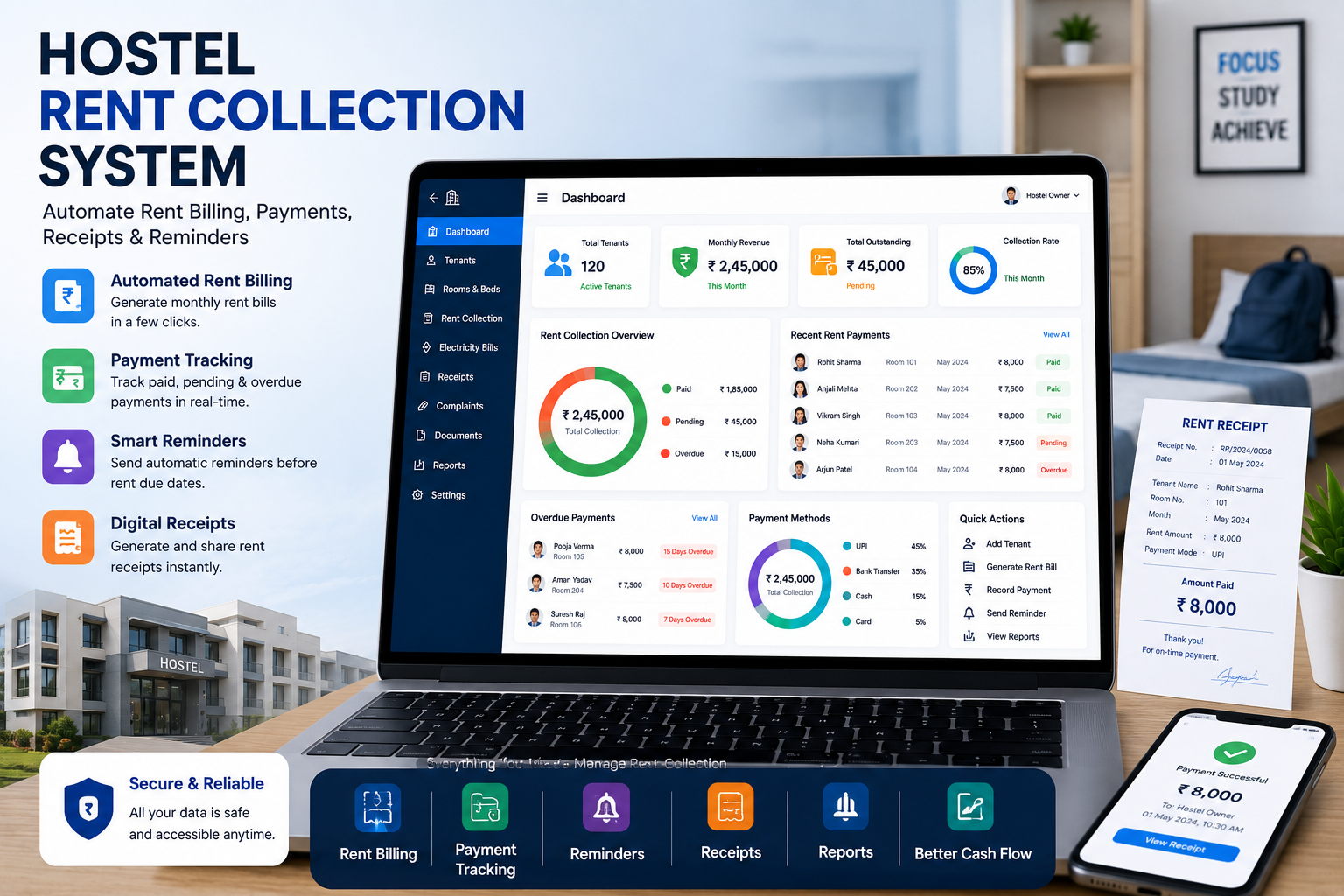
Tired of chasing late rent and dealing with default disputes? Use RentTenant to automate WhatsApp payment links, daily late fee ledgers, digital rent receipts, and default tracking.
Stage 3: Advocate Legal Notice to Quit (Day 25)
- Engage a real estate advocate to issue a formal Legal Notice under Section 106 of the Transfer of Property Act / Indian Contract Act.
- Demand immediate payment of arrears with interest and physical handover of premises within 15 days.
Stage 4: File Eviction Suit & Order 37 CPC Summary Suit (Day 40+)
- File an eviction application before the local Rent Controller / Tribunal.
- Simultaneously file an Order 37 CPC Summary Suit in Civil Court for financial recovery of unpaid rent, utility bills, and legal costs.
Calculating Security Deposit Offset & Arrears
If the defaulting tenant vacates or is evicted, calculate the deposit offset accurately:
$$\text{Net Refund / Owed Balance} = \text{Security Deposit} - (\text{Unpaid Rent Arrears} + \text{Late Fees} + \text{Unpaid Utility Bills} + \text{Property Damages})$$
If total dues exceed the security deposit, the remaining balance can be claimed in your Order 37 CPC recovery suit.
Automating Rent Collection & Default Prevention with RentTenant
Preventing rent defaults starts with friction-free, automated collection systems. RentTenant provides an end-to-end rent management suite:
Key RentTenant Capabilities:
- Automated WhatsApp Payment Links: Auto-sends monthly digital rent invoices with embedded UPI, QR code, and Netbanking links to tenants and parents.
- Automated Grace Period & Daily Late Fees: Auto-calculates and logs daily late fee penalties directly into tenant ledgers.
- Instant Digital Rent Receipts: Automatically issues GST & HRA-compliant digital receipts upon payment confirmation.
- Audit-Ready Legal Export: Generates complete time-stamped payment histories, default logs, and formal demand letters ready for advocate presentation.
Frequently Asked Questions (FAQs)
Q1. What can a landlord do if a tenant refuses to pay rent in India?
Issue a formal 15-day written cure notice, followed by an advocate legal notice. If the tenant still defaults, file an eviction petition before the Rent Tribunal and a summary recovery suit under Order 37 CPC.
Q2. Can a landlord deduct unpaid rent from the security deposit?
Yes. Landlords are legally entitled to adjust outstanding rent arrears and unpaid utility bills against the tenant's security deposit upon lease termination.
Q3. Can a landlord cut off electricity or water if rent is not paid?
No. Disconnecting utilities is illegal under Indian criminal law (IPC Section 430). Landlords must follow legal notice and court eviction procedures.
Key Takeaways
Handling a non-paying tenant requires swift legal due process rather than illegal self-help. By maintaining written agreements, Using an appropriate recovery procedure, if available, and maintaining a reliable rent ledger with RentTenant can reduce avoidable disputes and protect their rental business.
Ready to automate your rent collection and eliminate rent defaults? Explore RentTenant Property Management Software Today
Source-Backed Owner Checklist
Legal, tax and compliance outcomes are fact-specific. Central statutes, model laws, state enactments, municipal rules, police orders and the signed agreement can produce different answers. Verify the current rule for the property's State/UT and local jurisdiction before acting.
| Check | Practical action |
|---|---|
| Reconcile ledger | Separate rent, utilities, deposit and disputed charges |
| Send notice | Use the agreement and applicable state-law cure process |
| Preserve services | Avoid coercive lockout or utility disconnection |
| Choose remedy | Confirm tribunal/court jurisdiction and procedure locally |
Worked example (illustrative, not legal or tax advice)
For rent of ₹20,000 due on the 5th, build a ledger showing principal, valid contractual charges and receipts. Order XXXVII is not automatic: court rules and the nature of the written claim determine whether summary procedure is available.
Primary and official sources
- Model Acts and tenancy-law resources — Ministry of Housing and Urban Affairs
- Transfer of Property Act, 1882 — Section 107 — India Code
- Code of Civil Procedure, 1908 — India Code
- Bharatiya Nyaya Sanhita, 2023 — India Code
Important: This article provides general operational information, not legal, tax or investment advice. Rules, notifications and portal processes can change. For a material decision or dispute, consult a qualified professional in the relevant State/UT and verify the current official text.
Related RentTenant Guides
- hostel rent collection workflow — Use scheduled billing, reminders and payment tracking before arrears escalate.
- hostel billing software — Maintain bills, receipts and an auditable balance history.
- PG notice period rules — Coordinate payment default action with valid agreement terms.

About the Author
Shilpi Shukla
Shilpi Shukla has 7 years of experience in rental property, hostel, PG, and tenant management. She shares practical insights to help property owners simplify operations, improve tenant experiences, and grow their rental business with RentTenant.