How to Start a PG or Hostel Business in India
A practical guide to starting a PG or hostel business in India, covering legal steps, startup costs, location, operations, marketing, and software to simplify management.
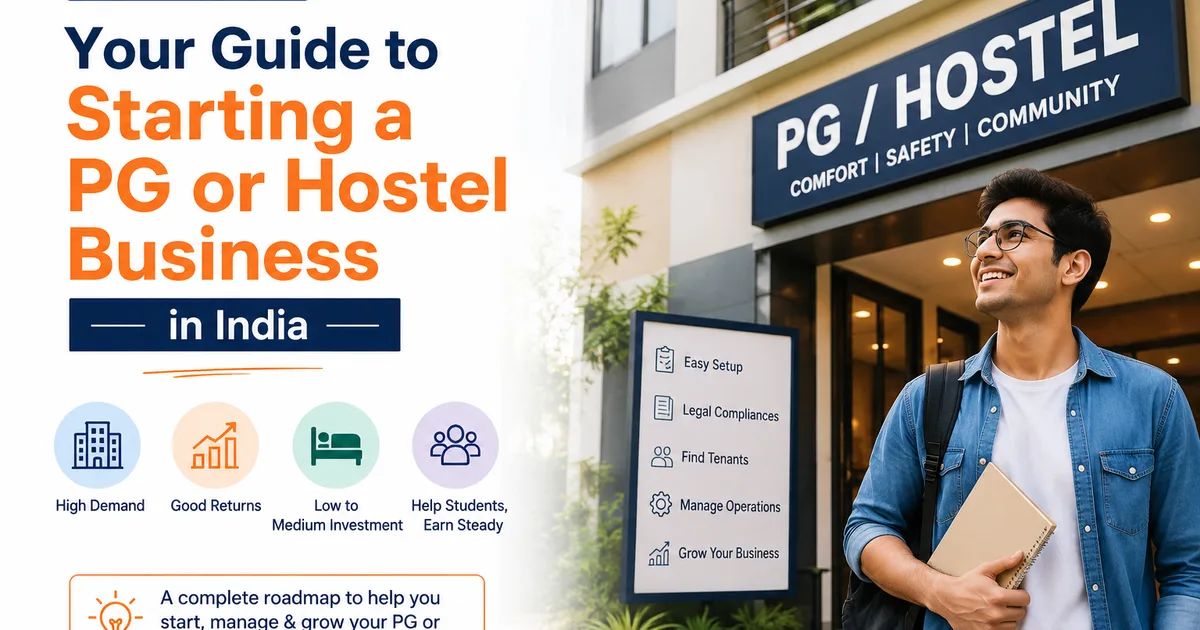
Introduction: Your Guide to Starting a PG or Hostel Business in India
Starting a PG or hostel business in India can be a practical rental venture for owners who want recurring demand from students, working professionals, interns, and other short-stay residents. The business looks simple at first glance, but the day-to-day work is where many new owners feel the strain: room allocation, rent follow-ups, maintenance, records, and tenant communication.
This guide covers the main decisions you need to make before launch: understanding demand, planning compliance, estimating costs, selecting a location, setting up operations, and marketing your property. It also shows where a management system can reduce manual work after opening.
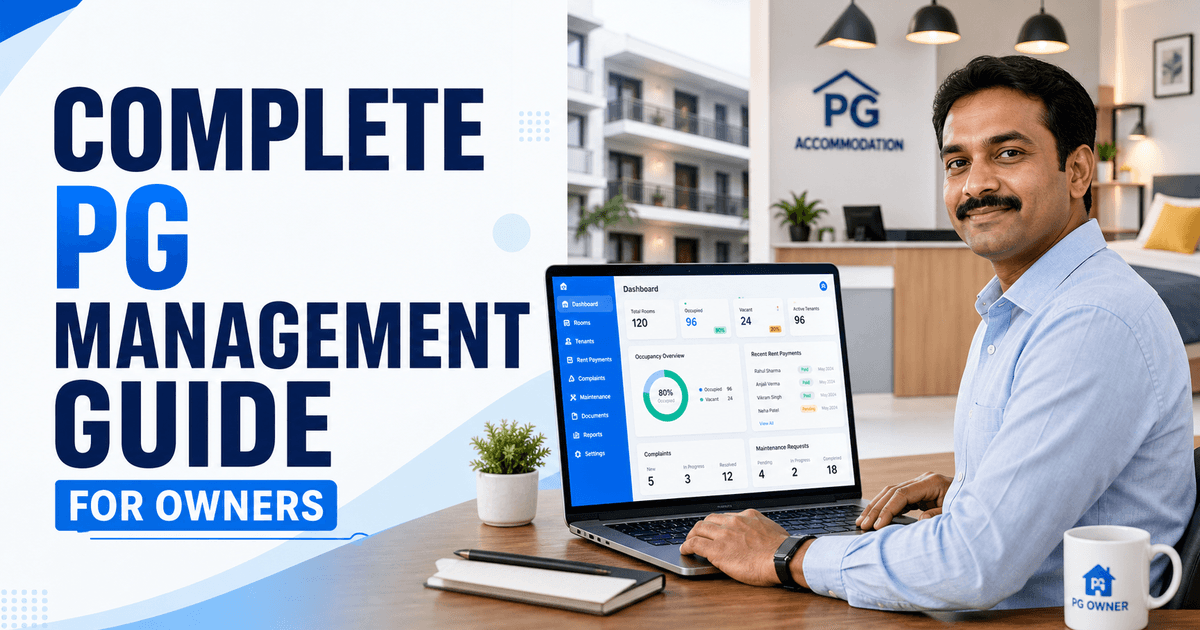
If you want a broader operational reference later, see our Complete PG Management Guide for Owners.
Understanding the Indian PG and Hostel Market
PGs and hostels often work best in places with repeat tenant flow and a clear reason for people to stay away from home. Common demand centers include colleges, coaching areas, office districts, hospitals, and industrial locations.
Before you invest, ask a few practical questions:
- Who is your main audience: students, working professionals, or both?
- Are you offering basic affordability or a more managed shared-living experience?
- Do nearby competitors seem full, discounted, or uneven in occupancy?
A good PG or hostel model is not just about filling beds. It is about balancing rent, upkeep, tenant expectations, and the effort needed to run the property smoothly. If the pricing is too low for the service level, the business can become stressful quickly. If the experience is weak on cleanliness, communication, or essentials, tenants may not stay long.
Navigating Legal and Regulatory Requirements
Before opening, owners should confirm the legal structure of the business, whether the property use matches the intended activity, and what approvals are needed locally. Because accommodation rules can involve local and state-level processes, a local professional review is sensible before launch.
Business Registration and Structure
Choose a structure that fits your ownership style and scale.
Common options include:
- Sole proprietorship: simpler to begin, but with less separation between business and personal matters.
- Partnership: useful when two or more people are investing and operating together.
- Company structure: may suit a larger or more formal setup.
Before you register, check whether the property and the planned use are aligned. A property that looks suitable for residence may still need review if you are running it as a PG or hostel business.
Practical owner decision questions:
- Will I run one property or more than one?
- Am I bringing in outside funding?
- Will family members or partners share control?
- Do I want clearer separation between business and personal finances?
Essential Licenses and Permits
The exact approvals depend on location, but new owners should check for the following before launch:
- Local municipal or trade-related permission
- Fire safety-related approvals, where required
- Health and sanitation-related compliance, where applicable
- State or local accommodation-related permissions, if required in the area
- Property-use and occupancy compliance based on building classification
A simple way to stay organized is to prepare a pre-opening compliance file that keeps approvals, agreements, and tenant records together. That makes it easier to manage onboarding and future checks.
For onboarding records, see Digital KYC for Hostel Tenants.
Financial Planning and Funding Your Venture
A PG or hostel may look attractive from the outside, but the initial spend can be significant because you often pay for the property setup before the first stable occupancy cycle. That is why both launch cost and working capital matter.
Estimating Initial Investment and Operational Costs
Common startup cost buckets include:
- Property purchase or lease deposit
- Renovation and repair work
- Furniture and bedding
- Common-area setup
- Internet, security, and utility arrangements
- Branding and launch marketing
- Staff hiring and training
- Working capital for the first operating months
A useful budgeting approach is to separate one-time setup costs from recurring monthly costs. Then think through the minimum occupancy you need to cover fixed expenses. Finally, keep a cushion for maintenance, delays in payment, and vacancies.
Useful planning questions:
- What costs are unavoidable before launch?
- Which expenses will repeat every month?
- How much reserve do I need if occupancy starts slowly?
- Which upgrades are essential, and which can wait?
Exploring Funding Sources
Owners often rely on one or more of these sources:
- Self-funding
- Bank loans
- Private investors
- Family support or partnerships
- Government-linked schemes, where eligible and available
If you borrow, make sure the repayment plan still works if occupancy rises more slowly than expected. Lenders and investors usually want a clear operating plan, especially around demand, compliance, and how the property will be managed.
Location, Property, and Facility Design
Location can make a major difference to occupancy and tenant retention. Even a well-furnished property may underperform if it is too far from the people you want to serve or if it is hard to reach.
Choosing the Optimal Location
Use a simple comparison framework before selecting a property:
| Factor | What to look for | What to avoid |
|---|---|---|
| Demand proximity | Near colleges, offices, hospitals, or industrial areas | Long travel time to the main tenant base |
| Connectivity | Easy road access and public transport | Poor last-mile access |
| Safety | Active, well-lit surroundings | Isolated or uncomfortable access routes |
| Utilities | Reasonable water, electricity, and internet availability | Frequent service interruptions |
| Competition | Demand exists without severe oversupply | Too many similar properties competing mainly on price |
Also make sure the location matches your target audience. A student-focused PG may need a different setup and price point from a property aimed at working professionals.
If occupancy planning is a concern, our guide on How to Reduce Hostel Vacancies is a useful next read.
Property Acquisition or Leasing Strategies
You can buy, lease, or partner on a property. Each route has trade-offs:
- Buying gives more control but requires more capital.
- Leasing reduces upfront cost but depends on lease terms and landlord consent.
- Partnership models can lower entry barriers but require clear responsibility sharing.
Before you sign, confirm whether the landlord allows PG or hostel use, what alterations are permitted, and who is responsible for repairs. Put these points in writing so they do not become disputes later.
Designing for Comfort and Functionality
A PG or hostel does not need luxury interiors, but it does need practical comfort. Tenants usually notice the basics first: cleanliness, beds, ventilation, bathroom condition, storage, internet, and security.
A useful amenities checklist includes:
- Clean, well-lit rooms
- Comfortable beds and mattresses
- Storage for belongings
- Reliable internet
- Power backup for essential needs
- Security or controlled entry
- Laundry arrangement
- Common area for shared use
- Reliable water and sanitation
If meals are part of your plan, keep the kitchen or vendor model manageable and aligned with local compliance expectations. Do not add features that are costly to maintain unless your target tenant will value them.
Operational Setup and Staffing
The property is only one part of the business. Once tenants move in, the real challenge is keeping routines consistent.
Key Operational Workflows
Before the first tenant arrives, define the main workflows you will use every day:
- Tenant onboarding and document collection
- Room, bed, and occupancy assignment
- Rent and deposit tracking
- Pending dues reminders
- Complaint logging and maintenance follow-up
- Utility or electricity billing, if applicable
- Refund and exit processing
A clear workflow reduces confusion when rooms change, payments are delayed, or complaints repeat. It also helps you keep a clean record of who occupies which bed and what was collected.
This is where PG Rent Collection Software can support the rent side of operations.
RentTenant provides property, room, bed, and tenant management workflows. It also supports rent, deposit, pending-dues, digital-receipt, and electricity-billing workflows; configured email and WhatsApp reminder workflows; complaint and maintenance tracking workflows; tenant KYC and rent-agreement workflows; and mobile-friendly owner and tenant experiences. Buddy AI provides owner-facing reporting assistance, including summaries of rent collection status and pending dues.
Manage Your PG/Hostel Business with Ease
Ready to streamline your PG or hostel operations? Discover how RentTenant's comprehensive management software can simplify rent collection, tenant onboarding, and daily tasks, allowing you to focus on growing your business.
Hiring and Training Your Team
Depending on property size and service level, you may need a caretaker or warden, cleaning staff, and security support.
When training staff, cover:
- Tenant communication standards
- How to escalate complaints and urgent issues
- Cleaning routines and checklists
- Visitor and access rules
- Basic reporting and record-keeping
A good team does more than maintain the property. It also helps the owner stay informed even when not physically present.
Marketing Your PG or Hostel and Attracting Tenants
Marketing should start before the property opens. A new PG or hostel is easier to fill when people can see the rooms, understand the offer, and contact you quickly.
Useful pre-launch actions include:
- Creating a clear brand name and positioning
- Building a basic website or landing page
- Setting up Google Business Profile correctly
- Sharing real photos of rooms, bathrooms, common areas, and access points
- Posting on local listing channels and social platforms
- Offering early-bird pricing or launch offers where suitable
Google recommends keeping business information accurate, using photos and videos, encouraging reviews naturally, and helping users understand what the business offers [1][2][3][4]. Google also explains that SEO is about helping search engines crawl, index, and understand content; useful content and a sensible site structure support that process [5][6].
For a dedicated acquisition playbook, see Best Marketing Channels for PGs and Hostels in India.
Practical launch checklist:
- Photos ready for rooms and shared areas
- Contact number and response process set
- Pricing and inclusions clearly stated
- House rules documented
- Google Business Profile updated
- Review collection process planned
Leveraging Technology for Efficient Management
Technology is most helpful when it reduces repetitive work and keeps records consistent.
RentTenant is built for that kind of operational support. It offers workflows for property, room, bed, and tenant management; rent and deposit tracking; pending dues; digital receipts; electricity billing; complaint tracking; maintenance tracking; tenant KYC; and rent agreements. It also supports configured email and WhatsApp reminders, plus mobile-friendly access for owners and tenants. Buddy AI adds owner-facing reporting help, including summaries of rent collection status and pending dues.
A practical rollout workflow for new owners:
- Map your room and bed structure.
- Add tenant records and KYC details.
- Set rent, deposit, and billing rules.
- Configure payment reminders.
- Track complaints and maintenance in one place.
- Review summaries regularly to spot dues and recurring issues.
Decision questions to ask before choosing a tool:
- Does it match my room and bed setup?
- Can it handle dues, receipts, and billing together?
- Will it help me track complaints without paper registers?
- Can owners and tenants use it easily on mobile?
- Can I check collection status quickly without spreadsheet work?
If you want a broader software overview, Hostel Management Software may help you compare your options.
Conclusion: Building a Successful PG or Hostel Business
A successful PG or hostel business depends on systems, not just rooms. The strongest launch plans usually combine the right property, clear compliance checks, realistic budgeting, practical amenities, and daily workflows that the team can actually follow.
As you move from setup to operation, focus on the routines that protect occupancy and cash flow: clean onboarding, timely collections, prompt repairs, and clear communication. If you can keep those parts steady, the business becomes much easier to manage.
FAQ
What are the essential legal steps to register a PG or hostel business in India?
Start by choosing a business structure that fits your ownership model, such as a proprietorship, partnership, or company. Then confirm that the property use matches your planned activity and check the local approvals needed to operate. Depending on the area, this may include municipal permission, fire safety-related approvals, health and sanitation-related compliance, and any local accommodation-related permissions.
How much initial investment is typically required to start a PG or hostel in India?
There is no single fixed number because the cost depends on the property, city, and service level. The main components usually include lease or purchase costs, renovation, furniture, amenities, marketing, staff setup, and working capital. A practical plan should also include a reserve for repairs, vacancy, and the first months of operation.
What factors should I consider when selecting a location for my PG or hostel?
Focus on demand proximity, connectivity, safety, utility reliability, and the level of nearby competition. Also check whether the area matches your target tenant group, such as students or working professionals. A low-rent property can still be a poor choice if access is inconvenient or the area lacks dependable water, electricity, or internet.
Which amenities are crucial for attracting and retaining tenants in a modern PG or hostel?
The essentials usually include reliable internet, clean rooms, comfortable beds, working bathrooms, storage, security, laundry support, and common areas. Depending on your audience, power backup and meal arrangements may also matter. Tenants tend to stay longer when the basics are dependable and easy to use.
How can I effectively market my new PG or hostel to potential tenants before launch?
Start before opening by creating a clear brand, posting real photos, setting up Google Business Profile, and building a simple website or landing page. Use local listings and social channels to increase visibility. Google’s guidance supports accurate business information, photos, reviews, and useful content for search visibility [1][2][3][4][5][6].
What are the key operational challenges for new PG/hostel owners?
Common challenges include tenant acquisition, rent collection, maintenance follow-up, staffing, complaint handling, and keeping records accurate. New owners often spend more time than expected on these routine tasks. A clear workflow and management software can reduce confusion and missed follow-ups.
How long does it typically take to see SEO results for a new PG/hostel website?
SEO is not immediate. Google notes that it can take time for content to be crawled, indexed, and understood, so results usually build gradually rather than overnight [5][6]. The best approach is steady effort: useful content, clear structure, and accurate business information.
Manage Your PG/Hostel Business with Ease
Ready to streamline your PG or hostel operations? Discover how RentTenant's comprehensive management software can simplify rent collection, tenant onboarding, and daily tasks, allowing you to focus on growing your business.
Practical owner decision checklist
Use this checklist before you launch or upgrade your PG/hostel operation:
- Have I chosen the right business structure for my scale and ownership setup?
- Have I checked the property-use and local approval requirements before opening?
- Do I know my main tenant type and what they value most?
- Have I separated one-time setup costs from recurring monthly costs?
- Do I have a reserve for vacancies, repairs, and delayed payments?
- Does the location match my tenant demand and connectivity needs?
- Are the essentials in place: clean rooms, beds, water, internet, and security?
- Do I have a clear process for onboarding, rent collection, complaints, and exits?
- Have I planned pre-launch marketing and Google Business Profile setup?
- Will my software help me manage rooms, beds, dues, receipts, KYC, and complaints in one place?
Sources and references
- Edit your Business Profile - Google Business Profile Help — Google Business Profile
- Tips to improve your local ranking on Google - Google Business Profile Help — Google Business Profile
- Manage your Business Profile photos and videos - Computer - Google Business Profile Help — Google Business Profile
- Tips to get more reviews - Google Business Profile Help — Google Business Profile
- How To Use Search Console | Google Search Central | Documentation | Google for Developers — Google Search Central
- SEO Starter Guide: The Basics | Google Search Central | Documentation | Google for Developers — Google Search Central

About the Author
Shilpi Shukla
Shilpi Shukla has 7 years of experience in rental property, hostel, PG, and tenant management. She shares practical insights to help property owners simplify operations, improve tenant experiences, and grow their rental business with RentTenant.