Complete PG Management Guide for Owners
A practical PG management guide for owners covering tenant onboarding, KYC, room allocation, rent collection, occupancy, complaints, security, staff, and move-outs.
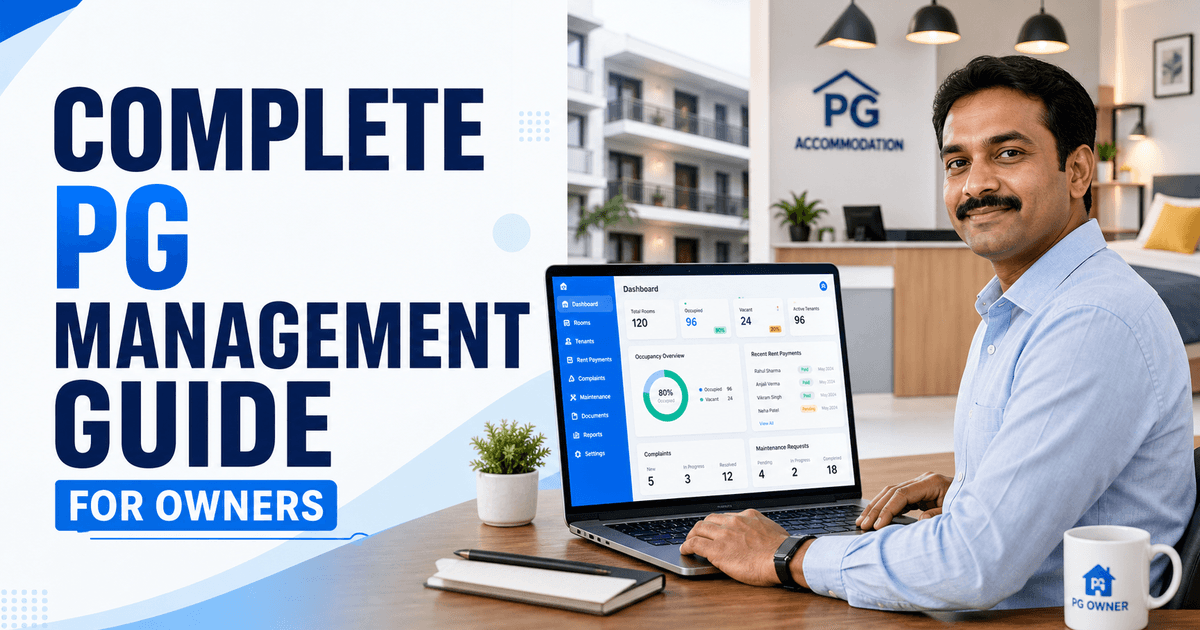
Running a paying guest property involves much more than collecting rent and assigning rooms. A PG owner must manage enquiries, tenant KYC, room and bed allocation, agreements, rent, deposits, electricity charges, complaints, maintenance, visitors, staff, renewals, and move-outs. When these activities are spread across registers, spreadsheets, payment screenshots, and WhatsApp chats, even a small PG can become difficult to control.
This complete PG management guide explains how owners can build a reliable operating system for their property. Whether you manage one PG building or multiple locations, the goal is the same: keep every tenant, room, payment, and task visible from one place.
What Is PG Management?
PG management is the complete process of operating a paying guest accommodation efficiently. It begins when a prospective tenant makes an enquiry and continues through admission, KYC verification, room allocation, monthly billing, complaint handling, and final move-out.
A structured PG management process should cover:
- Enquiries and property visits
- Tenant registration and digital KYC
- Room and bed availability
- Rent, deposit, and utility billing
- Payment reminders and digital receipts
- Complaints and maintenance
- Visitor and security records
- Staff responsibilities
- Tenant communication
- Renewals, notice periods, and exits
- Occupancy, collection, and revenue reports
The purpose is not only to reduce paperwork. Good PG management gives owners better financial control, improves the tenant experience, and makes business growth easier.
Why Manual PG Management Creates Problems
Many PG owners begin with a notebook, an Excel sheet, and a WhatsApp group. This may work for a few tenants, but the system becomes unreliable as the property grows.
Typical problems include:
- A bed appears vacant in one record but occupied in another
- Rent payments are confirmed through screenshots without a central ledger
- Security deposits and deductions are difficult to reconcile
- Tenant documents remain incomplete or scattered
- Complaints are forgotten inside personal chats
- Owners cannot see real-time occupancy or pending rent
- Staff members depend on the owner for every update
- Old receipts, agreements, and payment histories are hard to find
These issues consume time and can cause revenue leakage, tenant disputes, and poor service. A single PG management system creates one source of truth for the owner and staff.
Step 1: Create a Standard Tenant Onboarding Process
Every admission should follow the same checklist. A consistent onboarding process prevents missing documents, unclear payment terms, and incorrect room assignments.
Collect and record:
- Full name, mobile number, and email address
- Permanent address and emergency contact
- Aadhaar, passport, driving licence, or another accepted ID
- Student ID or employer details where relevant
- Move-in date and expected stay duration
- Assigned property, room, and bed
- Monthly rent, due date, and billing cycle
- Security deposit and payment status
- Included services and additional charges
- Agreement, house rules, and notice period
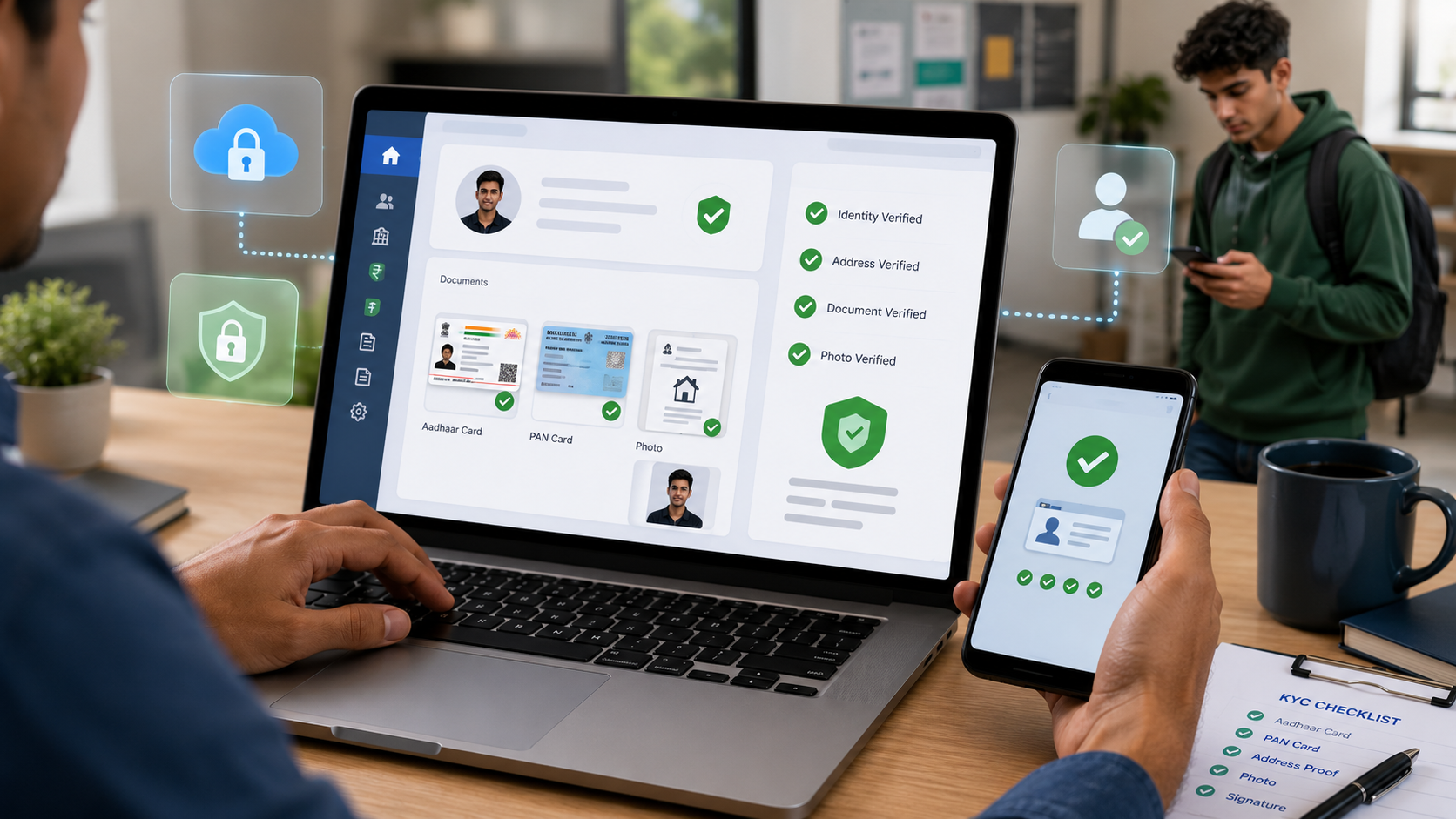
Complete KYC before or at move-in and keep the documents linked to the tenant profile. Owners should also follow the tenant-verification and record-keeping requirements applicable in their city or state.
For a detailed verification workflow, read Digital KYC for Hostel Tenants.
Step 2: Organize Properties, Rooms, and Beds
A PG is usually sold bed by bed, not only room by room. Your records must therefore show the exact status of every bed.
Create a hierarchy such as:
- Property
- Floor
- Room
- Bed
- Current tenant
For each room, record its type, capacity, monthly price, amenities, and occupancy status. Use clear states such as vacant, reserved, occupied, under maintenance, and blocked.
This structure helps owners avoid double allocation and answer an enquiry immediately. It also shows which room types remain vacant and where pricing or marketing needs attention.
Step 3: Maintain Real-Time Occupancy Tracking
Occupancy is one of the most important PG business metrics. A full property can still perform poorly if collections are delayed, but vacant beds immediately reduce potential revenue.
Track:
- Total beds
- Occupied beds
- Vacant beds
- Reserved beds
- Beds under maintenance
- Expected move-ins
- Upcoming move-outs
- Occupancy percentage by property and room type
Update occupancy as soon as a booking, room transfer, or exit occurs. A live occupancy dashboard allows the owner and staff to work with the same information.
Step 4: Set Clear Rent and Deposit Rules
Every tenant should know the rent amount, due date, late-payment policy, security deposit, refund conditions, and additional charges before moving in.
Your billing setup should record:
- Monthly rent
- Security deposit
- Electricity or utility charges
- Food or mess charges
- Wi-Fi, laundry, parking, or other services
- Discounts or concessions
- Late fees, if permitted and agreed
- Previous balance or advance payment
Do not combine rent and deposit into an unclear payment entry. Keeping each charge separate makes receipts, outstanding balances, and move-out settlements easier to understand.
Step 5: Build a Reliable PG Rent Collection Workflow
Rent collection should follow a repeatable monthly process instead of depending on manual follow-ups.
Before the Due Date
Generate the monthly bill, verify additional charges, and send a polite reminder with the amount, due date, and payment instructions.
On the Due Date
Check the collection dashboard and send a reminder only to tenants whose payment is still pending.
After Payment
Record the payment mode, reference number, amount, and date. Generate a digital receipt immediately and update the outstanding balance.
After the Due Date
Follow the agreed late-payment process. Keep communication professional and maintain a record of reminders.
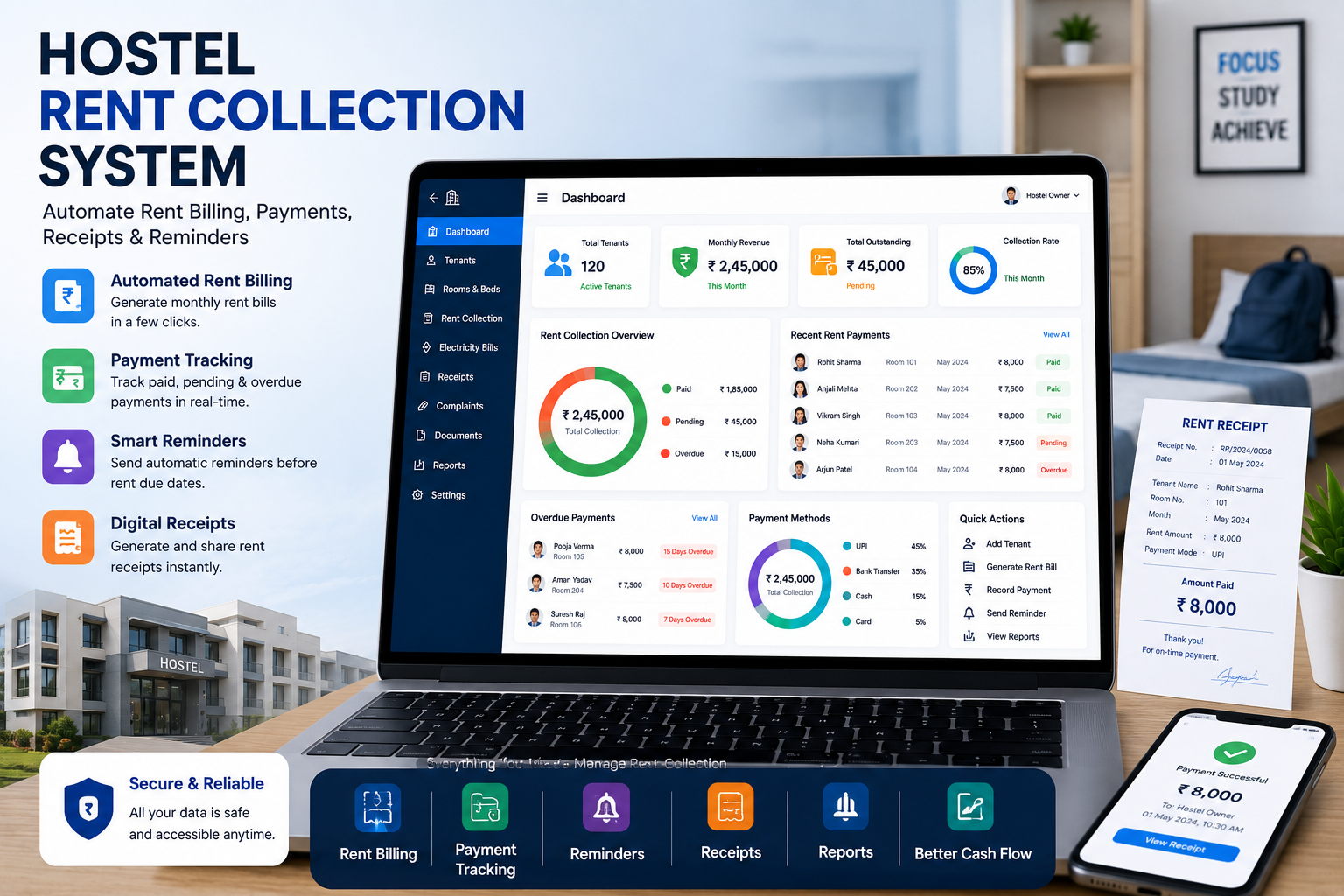
A clear collection workflow reduces missed payments and avoids repeatedly messaging tenants who have already paid. Learn more in the Hostel Rent Collection System guide.
Step 6: Generate Digital Bills and Receipts
Every bill and receipt should be easy for both the owner and tenant to understand.
A useful bill includes:
- Tenant and property name
- Room or bed number
- Billing month
- Rent and itemized additional charges
- Previous balance
- Total payable amount
- Due date
A useful receipt includes:
- Receipt number
- Amount received
- Payment date and mode
- Payment reference
- Amount adjusted against each charge
- Remaining balance, if any
Digital records reduce disputes and make monthly reconciliation faster than searching bank statements and chat messages.
Step 7: Manage Electricity and Other Utility Charges
Utility billing is a common source of disagreement in PG properties. Clearly define whether electricity is included in rent, shared equally, charged by sub-meter, or billed according to another agreed method.
If meters are used, record:
- Previous reading
- Current reading
- Units consumed
- Rate per unit
- Fixed charges
- Billing period
- Final payable amount
Keep meter readings and calculations visible to the tenant. Consistent, transparent billing builds trust and reduces complaints.
Step 8: Track Complaints and Maintenance
PG tenants expect quick action on water, electricity, cleaning, Wi-Fi, furniture, appliance, and security issues. Complaints sent only through calls or personal messages are easy to miss.
Use a complaint workflow with:
- Complaint category and description
- Tenant, room, and property
- Priority
- Assigned staff member or vendor
- Opened date and expected resolution date
- Status: open, in progress, resolved, or closed
- Resolution notes and cost
Owners should review unresolved and repeated complaints every week. Repeated issues often reveal a larger maintenance problem. See the Hostel Complaint Management Guide for a detailed process.
Step 9: Improve PG Security and Visitor Management
Security procedures should be documented and applied consistently. Maintain current tenant records, emergency contacts, staff access, and visitor entries.
A visitor log can capture:
- Visitor name and mobile number
- Tenant being visited
- Entry and exit time
- Purpose of visit
- ID details where required
- Approval or verification status
Define visiting hours and emergency procedures clearly. Access to sensitive KYC and payment data should be limited to authorized staff. The Hostel Visitor Management System guide explains this workflow in more detail.
Step 10: Define Staff Roles and Daily Responsibilities
When responsibilities are unclear, tasks are delayed and records become inconsistent. Assign ownership for admissions, collections, cleaning, maintenance, complaints, and security.
Use role-based access so staff can perform their work without seeing or changing information they do not need. For example:
- Reception staff can register enquiries and tenants
- Property managers can allocate rooms and manage complaints
- Accounts staff can update bills and payments
- Owners can view reports and control permissions
Maintain daily opening and closing checklists so important tasks do not depend on memory.
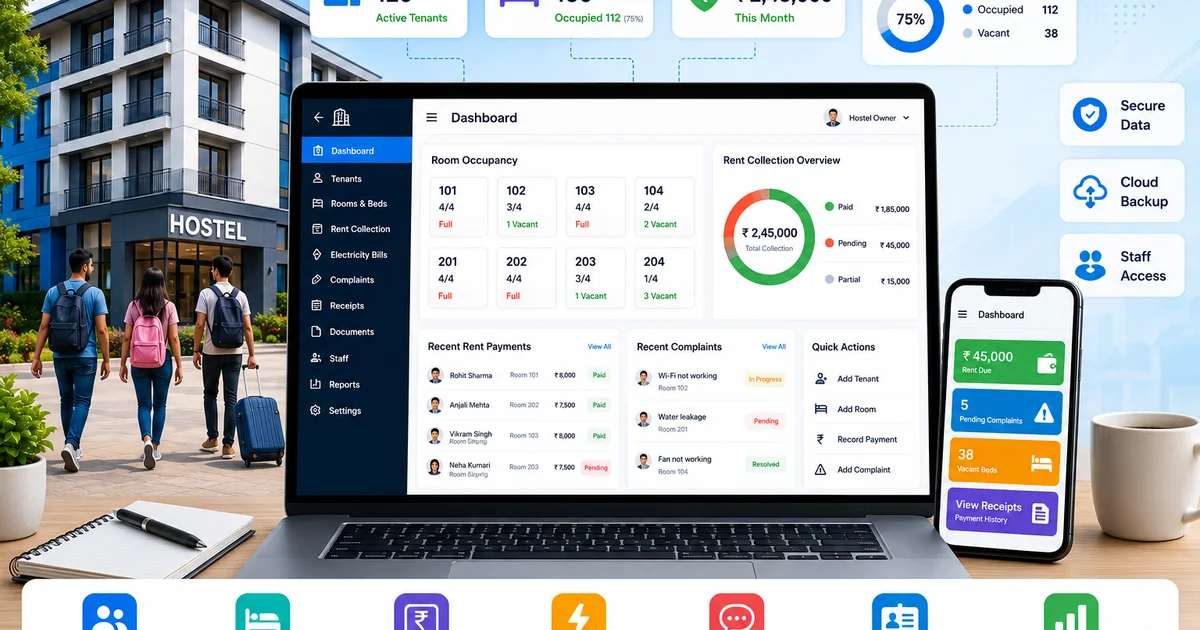
Manage your PG from one dashboard
Organize tenants, KYC, rooms, rent, receipts, reminders, complaints, and daily property operations with RentTenant.
Step 11: Communicate With Tenants Professionally
Use consistent messages for admission confirmation, payment reminders, receipts, maintenance updates, announcements, and move-out instructions.
Good tenant communication should be:
- Timely
- Clear
- Polite
- Relevant
- Recorded
Avoid sending the same reminder manually to every tenant. Automated WhatsApp or email reminders can save time, but owners should verify that contact preferences and message content are appropriate.
Step 12: Handle Renewals, Transfers, and Move-Outs
Tenant management does not end after move-in. Track agreement expiry, notice periods, room transfers, rent revisions, and expected exits.
A move-out checklist should include:
- Written notice and final exit date
- Pending rent and utility charges
- Room and asset inspection
- Damage or deduction details
- Key and access return
- Security deposit settlement
- Final receipt or statement
- Bed status changed to vacant or maintenance
- Tenant documents archived according to policy
Complete the settlement transparently and record every deduction. This protects both the owner and tenant.
Step 13: Monitor the Right PG Management Reports
Owners do not need dozens of reports. They need a small set of accurate numbers that support decisions.
Review these metrics regularly:
- Occupancy percentage
- Vacant beds by property and room type
- Monthly rent billed
- Rent collected
- Pending and overdue rent
- Security deposits held and refunded
- New admissions and move-outs
- Open and overdue complaints
- Maintenance expenses
- Monthly revenue and collection rate
Compare trends across months and properties. If occupancy is falling, investigate pricing, enquiries, room quality, reviews, or seasonal demand. If pending rent is rising, improve reminders and collection discipline.
Daily, Weekly, and Monthly PG Management Checklist
Daily
- Update admissions, exits, and room transfers
- Record payments and issue receipts
- Review new complaints
- Check expected visitors and security issues
- Confirm housekeeping and maintenance tasks
Weekly
- Review vacant beds and upcoming move-outs
- Follow up on pending documents
- Check overdue rent and unresolved complaints
- Inspect common areas and selected rooms
- Reconcile online and cash collections
Monthly
- Generate bills and utility charges
- Review occupancy and collection reports
- Reconcile deposits and outstanding balances
- Check agreement renewals
- Review maintenance expenses
- Back up or verify important records
- Plan pricing, promotions, and property improvements
How PG Management Software Helps Owners
PG management software brings tenant records, rooms, billing, payments, receipts, complaints, documents, communication, and reports into one system.
For owners, the main benefits are:
- One reliable record for every tenant and bed
- Faster admissions and room allocation
- Clear pending-rent visibility
- Organized bills, payments, and receipts
- Better complaint accountability
- Controlled staff access
- Easier management of multiple properties
- More accurate business decisions
When selecting software, focus on the workflow rather than a long feature list. The system should be easy for staff to use, work well on mobile devices, protect sensitive data, and support the billing and occupancy model of your PG.
Common PG Management Mistakes to Avoid
- Accepting tenants without completing records and KYC
- Assigning rooms without a live bed-availability view
- Mixing rent, deposits, and utility payments
- Relying only on payment screenshots
- Handling every complaint through personal WhatsApp chats
- Giving all staff unrestricted access
- Ignoring upcoming move-outs and agreement expiry
- Refunding deposits without a documented settlement
- Tracking revenue without tracking outstanding rent
- Waiting until the end of the month to update records
Small process improvements made consistently are more valuable than occasional large clean-ups.
Conclusion
Successful PG management depends on clear processes and accurate records. Owners need a complete view of tenants, rooms, beds, rent, deposits, utilities, complaints, maintenance, staff tasks, and move-outs.
Start by standardizing onboarding, room allocation, billing, payment recording, complaint tracking, and exit settlement. Then move these workflows into a digital PG management system so information remains current and accessible as the business grows.
RentTenant helps PG owners manage tenant profiles, KYC, rooms, rent, receipts, reminders, complaints, and property operations from one dashboard.
Frequently Asked Questions
What is the best way to manage a PG?
Use a standard process for tenant onboarding, KYC, room allocation, billing, rent collection, complaints, and move-out. Keep all records in one PG management system and review occupancy and pending-rent reports regularly.
What records should a PG owner maintain?
A PG owner should maintain tenant contact and KYC details, room and bed allocation, agreements, rent and deposit records, utility bills, receipts, complaints, visitor entries, maintenance records, and move-out settlements. Local legal requirements may add further records.
How can PG owners reduce late rent payments?
Set a clear due date, generate bills on time, send reminders before and on the due date, provide convenient payment options, issue receipts immediately, and track overdue amounts in one dashboard.
How does PG management software improve occupancy?
It shows real-time vacant beds, upcoming move-outs, room types, and occupancy trends. Owners can respond to enquiries faster and focus marketing or pricing changes on the beds that remain vacant.
Can one system manage multiple PG properties?
Yes. A multi-property PG management system can organize each property, floor, room, bed, tenant, payment, and report separately while giving the owner a combined business overview.
Is digital KYC enough for tenant verification?
Digital KYC improves document collection and record organization, but owners should also follow applicable police verification, accommodation, privacy, and local compliance requirements.

About the Author
Shilpi Shukla
Shilpi Shukla has 7 years of experience in rental property, hostel, PG, and tenant management. She shares practical insights to help property owners simplify operations, improve tenant experiences, and grow their rental business with RentTenant.