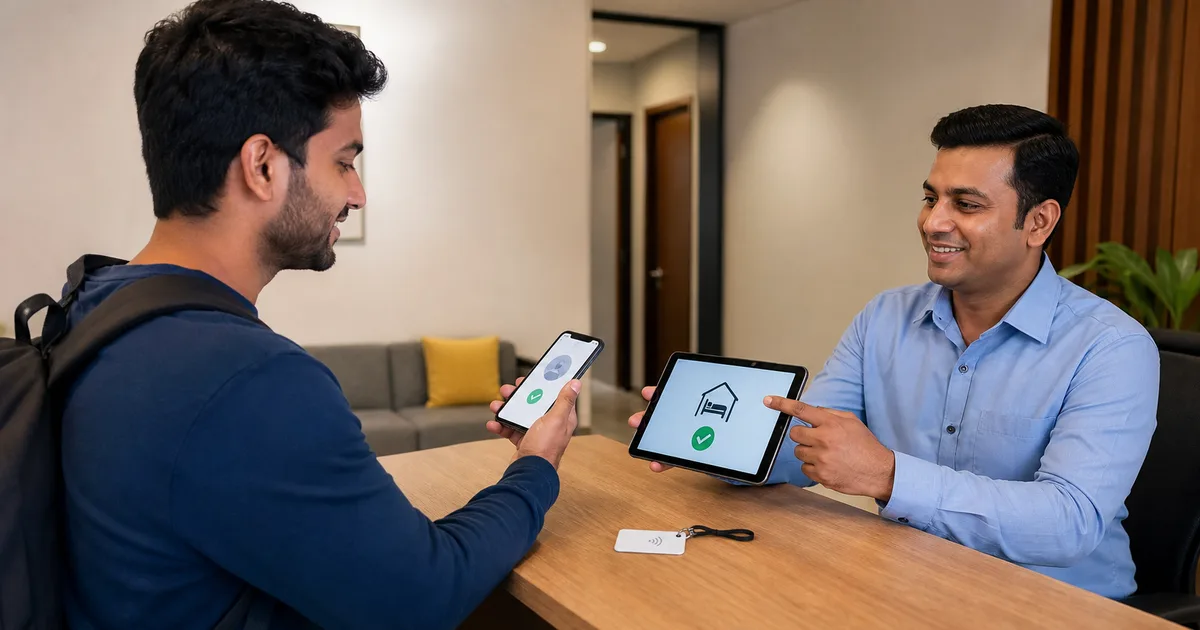
Digital KYC for Hostel Tenants: A Smarter Way to Verify Tenant Identity
Managing tenant documents manually can be time-consuming and risky. Digital KYC helps hostel owners verify tenant identities, store records securely, and simplify the entire onboarding process.

Tenant verification is one of the most important responsibilities of every hostel owner. Whether you manage a student hostel, PG accommodation, or co-living property, maintaining accurate tenant records is essential for security and compliance.
Many hostel owners still collect tenant documents through paper forms, photocopies, and WhatsApp messages. As the number of tenants increases, managing these records becomes difficult.
Digital KYC (Know Your Customer) helps hostel owners verify tenant identities online while keeping all records organized in one secure system.
Why Tenant Verification is Important
Hostels often accommodate students, working professionals, and temporary residents. Proper verification helps maintain a safe environment for everyone.
Without proper KYC management, owners may face:
Missing documents
Incomplete tenant records
Difficulty finding tenant information
Security concerns
Compliance issues
Time-consuming paperwork
Document loss or damage
Digital KYC solves these challenges by creating a centralized verification process.
What is Digital KYC for Hostel Tenants?
Digital KYC is an online process that allows hostel owners to collect, verify, and store tenant documents electronically.
Instead of maintaining physical files, all records can be stored securely in a hostel management system.
A digital KYC system can manage:
Aadhaar Card
PAN Card
Passport
Driving License
Student ID Card
Office ID Card
Address Proof
Rental Agreements
Emergency Contact Information
This creates a complete digital profile for every tenant.
Step 1: Collect Documents Online
The onboarding process becomes much easier when tenants can upload documents directly.
Tenants can submit:
Identity proof
Address proof
Photographs
Student or employee ID
Emergency contact details
This eliminates the need for physical paperwork and repeated follow-ups.
Step 2: Verify Tenant Information
Once documents are uploaded, hostel staff can review and verify the information.
Verification checks may include:
Document validity
Name matching
Address verification
Photo verification
Contact verification
After approval, the tenant profile becomes active in the system.
Step 3: Store Documents Securely
Physical document files can be misplaced, damaged, or difficult to retrieve.
Digital KYC allows hostel owners to store all documents securely in one location.
Benefits include:
Quick document access
Reduced paperwork
Centralized records
Secure cloud storage
Easy retrieval during emergencies
This improves operational efficiency and security.
Step 4: Link KYC with Tenant Profiles
Every verified document should be connected to the tenant's profile.
The profile may include:
Tenant name
Room number
Bed number
Move-in date
Rent amount
Security deposit
KYC status
Uploaded documents
This provides a complete view of every tenant.
Step 5: Improve Hostel Security
Verified tenant records help create a safer hostel environment.
Benefits include:
Knowing who is staying in the property
Reducing unauthorized occupancy
Faster response during emergencies
Better visitor management
Improved record keeping
Security becomes easier when every tenant has a verified digital identity.
Step 6: Simplify Renewals and Re-Admissions
Returning tenants often need to submit documents again.
With digital KYC, previously verified records can be accessed quickly, reducing onboarding time and improving the tenant experience.
Step 7: Enable Staff Access Control
Not every staff member should have access to sensitive tenant documents.
A good hostel management system should provide role-based access.
For example:
Reception staff can view basic details
Managers can verify KYC documents
Owners can access complete records
This improves data security and privacy.
Step 8: Maintain Compliance and Records
Hostel owners may occasionally need tenant records for administrative or legal purposes.
Digital KYC makes it easier to:
Retrieve records instantly
Maintain organized documentation
Generate reports
Track verification status
Manage tenant history
This reduces manual effort and improves compliance.
Benefits of Digital KYC for Hostel Owners
Digital KYC provides several advantages:
Faster tenant onboarding
Reduced paperwork
Better security
Organized document storage
Easy record retrieval
Improved compliance
Centralized tenant management
Enhanced tenant experience
Time savings for staff
Scalable operations
For growing hostels and PG businesses, digital KYC becomes an essential management tool.
Conclusion
Managing tenant verification manually becomes difficult as hostel occupancy grows. Paper records, scattered documents, and manual verification processes increase workload and create security risks.
Digital KYC helps hostel owners verify tenants, store documents securely, improve safety, and simplify onboarding. By moving verification online, hostel operators can save time, reduce errors, and maintain organized tenant records.
Platforms like RentTenant allow hostel owners to manage tenant KYC, room allocation, rent collection, complaints, receipts, and hostel operations from one centralized dashboard.
CTA Button 1
Start Digital KYC for Your Hostel
CTA Button 2
Explore RentTenant Features
Manage hostel tenants online with RentTenant
Free KYC, rent agreement, mess facility, custom WhatsApp reminders, automated WhatsApp reminders for rent, due and deposit, custom email reminders, and automated email reminders.

About the Author
Shilpi Shukla
Shilpi Shukla has 7 years of experience in rental property, hostel, PG, and tenant management. She shares practical insights to help property owners simplify operations, improve tenant experiences, and grow their rental business with RentTenant.