Odisha Women Workers Hostel: Kalibeti Housing Project
Explore the planned Kalibeti women workers hostel and what it could mean for safe industrial workforce housing in Odisha.

Introduction: A Paradigm Shift in Industrial Infrastructure
In the conventional discourse of industrial development, progress is frequently measured in cold, quantitative metrics: the volume of capital investments, the square footage of factory floors, and the capacity of power grids. Yet, the true engine of any industrial economy is its human capital. Without sustainable, secure, and equitable infrastructure for the workers who power these industries, physical capital cannot achieve its full potential.
On Monday, 8th June 2026, the Odisha State Cabinet, presided over by key policymakers, approved a landmark decision that shifts workforce housing from a peripheral support service to core industrial infrastructure. The Cabinet greenlit the turnkey tender process for the construction of a massive, state-of-the-art Women Workers’ Hostel at the Kalibeti Industrial Area in Khordha (also referred to as Khurda) district.
With an approved estimated cost of ₹210.36 crore, this mega-hostel has been described as a planned 4,000-bed facility for women workers. Funded under the central government’s Scheme for Assistance to States for Capital Investment (SASCI)—also recognized locally in context as the Scheme for Apparel and Technical Textiles in Odisha (SASCI)—this project represents a major policy intervention. It is slated to be executed by the Industrial Infrastructure Development Corporation of Odisha (IDCO) within a strict 24-month timeline, rendering it fully operational by mid-2028.
This initiative is not an isolated real estate project; rather, it is a highly calculated, strategic intervention aimed at accelerating Odisha’s transition into India's premier textile and apparel manufacturing powerhouse. In the words of Chief Secretary Anu Garg, who briefed reporters following the Cabinet meeting, this project is a priority for the state, seamlessly marrying the state's industrial ambitions with women-centric social development.
The Rise of Kalibeti: A Textile and Apparel Magnet
The selection of the Kalibeti Industrial Estate in Khordha as the site for this planned ₹210.36 crore hostel project is highly strategic. Over the past few years, Kalibeti has rapidly transformed into a premier hub for high-growth, labor-intensive manufacturing. It has successfully attracted massive investments from leading domestic and global textile and apparel giants.
Among the prominent corporations establishing a footprint in Kalibeti are:
- MAS Holdings: A global apparel design and manufacturing conglomerate renowned for its sophisticated supply chain and commitments to ethical manufacturing.
- EPIC Group: A major player in the global apparel industry, driving large-scale manufacturing operations.
- Indian Stitches: A leading domestic manufacturer contributing significantly to India's apparel export capacity.
These flagship industrial units are not merely expanding their physical structures; they are poised to create an employment boom in the region. According to official state projections, the Kalibeti Industrial Estate is expected to generate more than 20,000 jobs in the coming years.
However, the rapid influx of mega-factories brings an immediate, pressing challenge: where will the thousands of workers live? For operators managing large-scale student and workforce housing, adopting modern hostel management software becomes essential to streamline bed allocations and security. For an industrial cluster to remain competitive, it must have access to a stable, localized, and highly productive workforce. In labor-intensive sectors like textiles, the availability of quality, secure, and affordable housing is the practical determinant of operational viability.
The Demographics of Apparel: Why Women's Housing is the Bottleneck
To understand the profound impact of the Kalibeti Women Workers’ Hostel, one must look closely at the demographic reality of the global textile and apparel industry. Women form a substantial share of the apparel workforce, although the proportion varies by geography, employer and dataset. The operational case for safe worker housing does not depend on a single nationwide percentage.
Despite being the primary drivers of this sector, women workers face a unique set of systemic bottlenecks when transitioning from rural agricultural communities to industrial centers. The challenges of traditional, market-driven housing options in expanding industrial zones are manifold:
- Safety and Security Concerns: In private, unregulated rental markets near industrial estates, women often have to reside in substandard housing that lacks basic security features, exposing them to safety vulnerabilities.
- Exorbitant Living Costs: Private boarding houses or PG (Paying Guest) accommodations often exploit the sudden surge in rental demand, charging high rents that consume a significant portion of a worker’s take-home pay.
- Prohibitive Commuting Pressures: Due to the scarcity of affordable housing immediately adjacent to industrial zones, many women are forced to live in far-flung villages or urban fringes. This results in long, exhausting daily commutes, draining their energy and directly impacting their workplace productivity and long-term health.
- High Employee Turnover: The combined weight of unsafe living environments, financial stress, and commute exhaustion leads to exceptionally high attrition rates for factories. This constant turnover forces companies to spend excessive resources on recruitment and retraining, dragging down overall manufacturing efficiency.
By identifying workforce accommodation not as a private issue for workers to resolve, but as an essential element of the state's industrial infrastructure, the Odisha government is addressing these structural barriers head-on.
Inside the Kalibeti Women Workers' Hostel: detailed Blueprints
The ₹210.36 crore approved for the Kalibeti hostel will fund a facility that goes far beyond a basic dormitory. The vision of the Odisha State Cabinet is to establish a modern, detailed residential ecosystem integrated with social and community infrastructure.
Managing a mega-facility of 4,000 residents requires robust digital infrastructure. Property managers looking for an end-to-end operational framework can refer to our Complete PG Management Guide for Owners and implement automated tenant management software for seamless digital onboarding.
Physical Specifications and Executive Oversight
- Capacity: Designed to accommodate 4,000 women workers under one secure roof.
- Funding Framework: Fully funded under the Scheme for Assistance to States for Capital Investment (SASCI), ensuring that the state does not bear a debilitating fiscal burden while executing major capital assets.
- Executing Agency: The project has been entrusted to the Industrial Infrastructure Development Corporation of Odisha (IDCO). As the state's nodal agency for industrial infrastructure, IDCO brings specialized expertise in executing turnkey projects.
- Timeline: The turnkey contract is locked into a strict 24-month completion window from the date of its launch, targeting mid-2028 for full operationalization.
Beyond Brick and Mortar: Integrated Social Infrastructure
The design of the hostel is engineered to elevate the quality of life for its residents. Rather than standard high-density housing, the project incorporates:
- detailed Safety Systems: State-of-the-art security installations, controlled access points, and round-the-clock monitoring to ensure absolute safety for the residents.
- Community Spaces: Dedicated recreation areas, social lounges, and community halls that foster social cohesion and support mental well-being.
- Health and Hygiene Facilities: Well-equipped medical bays, proper sanitation systems, and modern dining halls serving nutritious food.
- Zero-Commute Design: Located directly within the Kalibeti Industrial Area, the hostel eliminates the need for motorized transport, allowing workers to walk to their factories in minutes.
The Triple Dividend: Economic, Social, and Industrial Benefits
The development of the Kalibeti Women Workers’ Hostel is a classic example of a triple-win initiative, yielding substantial dividends for workers, industrial employers, and the state's economy.
The Worker Dividend: Safety, Savings, and Dignity
For the 4,000 women who will reside in this facility, the benefits are life-changing. Living close to their workplace eliminates hours of tedious and unsafe travel. This direct physical proximity translates into lower personal expenses on public transport and auto rentals. Furthermore, by living in a subsidised, high-quality, state-supported facility, their monthly accommodation expenses drop significantly. The net result is a massive boost to their disposable household income, allowing them to send more money back to their families or save for their personal futures.
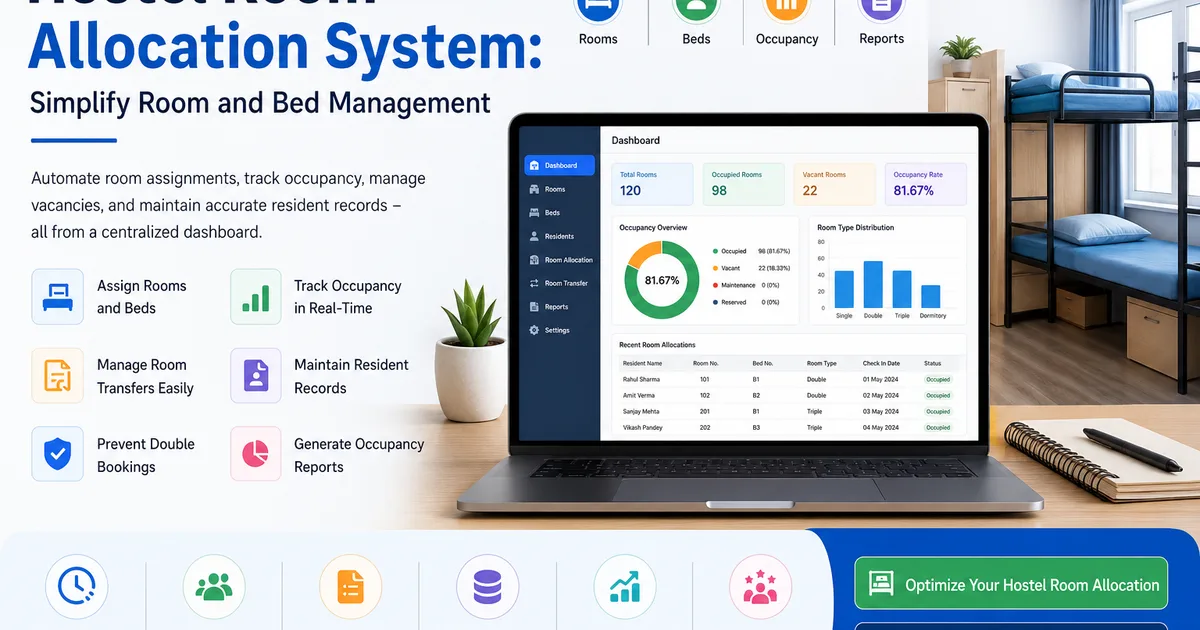
To streamline room and bed assignments in large industrial dormitories, management teams utilize hostel room allocation systems to prevent overcrowding and maintain detailed occupancy logs.
The Industrial Dividend: Stability, Quality, and Turnover Reduction
For employers like MAS Holdings, EPIC, and Indian Stitches, the hostel solves their most persistent operational bottleneck: labor volatility. High employee turnover is an industry-wide plague in textile manufacturing. When workers reside in safe, secure, and state-managed housing within walking distance of the factory floor, attrition rates plummet. Factories benefit from a highly reliable, punctual, and well-rested workforce, which directly translates into higher productivity, fewer manufacturing defects, and faster turnaround times for international apparel orders.
The State Dividend: Inclusive Growth and Global Competitiveness
For the state of Odisha, the project serves as a powerful marketing asset to attract further global investment. Modern international fashion brands are increasingly sensitive to environmental, social, and governance (ESG) standards. By demonstrating that the state actively partners with industry to provide world-class, safe housing for workers, Odisha positions itself as an ethical, progressive, and highly competitive manufacturing destination. This directly supports the state's vision of becoming India's textile and apparel powerhouse.
Contextualising the Decision: A Broader Governance Reform Agenda
To fully appreciate the scope of this cabinet decision, it is essential to look at the other major policy approvals cleared during the same historic Cabinet meeting on Monday, 8th June 2026. Under the leadership of Chief Secretary Anu Garg and the administrative machinery, the state approved a series of far-reaching infrastructure, urban development, and social equity reforms.
These parallel approvals demonstrate that Odisha is pursuing a detailed, multi-sectoral strategy designed to balance rapid industrialisation with environmental sustainability and social safety nets.
Social Equity: Slashing Registration Fees under PMAY-U 2.0
In a major move to provide relief to the economically weaker sections (EWS) of society, the Cabinet approved a proposal to dramatically reduce stamp duty and registration fees for affordable housing units registered under the Pradhan Mantri Awas Yojana-Urban 2.0 (PMAY-U 2.0).
- The Reform: The registration and stamp duty fees have been slashed to a fraction of their previous levels, ranging between 0.6% and 0.7%, depending on the gender of the owner.
- The Impact: These revised rates represent a staggering one-tenth of the existing rates. This historic fee reduction is applicable not only to PMAY-U 2.0 housing units but also to any affordable housing units developed under state-specific urban schemes, making homeownership a realistic goal for the state's most vulnerable urban residents.
Automate Your Women's Hostel & Industrial PG Operations
Streamline tenant onboarding, digital visitor tracking, automated rent collection, and room allocation with RentTenant's all-in-one management platform.
Urban Modernisation: 24x7 Drinking Water and Wastewater Treatment
As the capital city of Bhubaneswar undergoes rapid urban expansion, the state cabinet cleared two major projects to manage urban density and protect the local environment:
- WATCO Expansion: The Water Corporation of Odisha (WATCO) has been authorized to implement a detailed 24x7 piped water supply scheme across all newly expanded areas falling under the jurisdiction of the Bhubaneswar Development Authority (BDA). The objective is to provide continuous, equitable, and safe drinking water to all residents, schools, commercial establishments, and public institutions.
- Daya-Gangua Wastewater Treatment Plant: To mitigate urban pollution and protect local water bodies, the cabinet approved the construction of a major Wastewater Treatment Plant at the confluence of the Daya River and the Gangua Nullah. Sanctioned at an estimated cost of ₹109.89 crore, this modern facility will intercept, divert, and treat municipal wastewater before it discharges into natural river systems, ensuring ecological preservation amid rapid urban sprawl.
Water Security and Agricultural Prosperity: The Brutang Saddle Spillway
Addressing the agricultural needs of the coastal and interior districts, the Cabinet cleared a long-awaited proposal from the Water Resources Department:
- The Project: The construction of a saddle spillway for the Brutang Reservoir near Manjari village in Nayagarh district.
- Financial and Time Outlay: Approved at an estimated cost of ₹194.07 crore with a strict completion timeline of 30 months.
- Strategic Benefits: Upon completion, the Brutang Irrigation Project will provide assured, year-round irrigation to 309 villages, creating a massive irrigation potential of 23,300 hectares. This is expected to radically improve the socio-economic conditions of farming families, boost agricultural yields, and spur rural development across the region.
Replacing Aging Infrastructure: The Mahanadi Bridge-cum-Barrage
In Sambalpur, the state is taking proactive steps to replace outdated, leaking hydraulic structures to secure urban water supplies:
- The Challenge: The Ayodhya Sagar weir, constructed across the Mahanadi River in the 1960s, serves as the primary drinking water source for Sambalpur town and its adjoining rural areas. Over decades of operation, the structure had developed deep structural cracks and heavy water leakage, severely compromising its efficiency. Rigorous technical assessments concluded that repairing the aging weir was both technically unfeasible and economically unviable.
- The Solution: The Cabinet cleared the lowest financial bid of ₹440,33,91,470.06 (excluding GST) for the construction of a brand-new, modern in-stream storage structure (ISS) and bridge-cum-barrage downstream of the existing Ayodhya Sagar weir.
- Timeline and Scope: The turnkey package includes a strict 30-month construction window along with a mandatory five years of detailed operation and maintenance (O&M) services.
- Multi-Purpose Dividends: Beyond securing a reliable, continuous drinking water supply for Sambalpur town, the new bridge-cum-barrage will enhance regional groundwater recharge, support local animal husbandry and fisheries, and maintain the surrounding ecological balance. In addition, it will feature recreational boating facilities to promote local tourism and include the development of a dedicated Alati Ghat for the Samaleswari Temple to support regional cultural and religious activities.
Boosting Tourism Capital: The ₹1500 Crore Tourism Land Bank
To elevate Odisha's position on the national tourism map and capture private capital, the Cabinet approved a major land-related scheme:
- The Scheme: The "Land Bank for Hospitality Infrastructure" scheme.
- The Scale: Backed by a massive financial outlay of ₹1,500 crore, the state is creating a dedicated 5,500-acre Tourism Land Bank at key scenic, cultural, and ecological locations. This land bank will streamline land acquisition, reduce administrative hurdles for private hospitality developers, and attract premium hotels, resorts, and tourism infrastructure projects to the state.
Sustainable Urban Landscapes: The ₹500 Crore Waterfront Development Scheme
To complement urban housing and water reforms, the state launched a major aesthetic and environmental urban initiative:
- The Scheme: The ₹500 crore Waterfront Development Scheme.
- The Goal: To systematically clean, design, and develop the waterfronts of major cities, creating public parks, green corridors, and recreational zones that promote sustainable urban growth and improve the overall liveability index of Odisha’s expanding urban centers.
Conclusion: Odisha's Blueprint for Progressive, Human-Centric Growth
For decades, developing economies have fallen into the trap of pursuing industrialisation at the cost of human well-being. Industrial zones were built as sterile spaces of production, leaving workers to fend for themselves in unregulated, unsafe, and expensive informal settlements. The results were predictable: high turnover, social distress, labor unrest, and restricted economic mobility, particularly for women workers.
Odisha’s ₹210.36 crore Women Workers’ Hostel at Kalibeti represents a clean break from this outdated model. By directly funding and executing high-quality housing for 4,000 women workers under the SASCI scheme, the Odisha government is demonstrating that worker well-being is not a welfare luxury; it is a competitive economic advantage.
When combined with the state's broader reforms—ranging from slashing EWS housing registration fees to investing in massive water systems, tourism land banks, and urban wastewater treatment plants—a clear governance philosophy emerges. Odisha is systematically building a modern, highly competitive industrial ecosystem grounded in ecological sustainability, urban liveability, and deep social equity.
As the construction of the Kalibeti hostel progresses toward its mid-2028 operational target, it will stand as a physical monument to a powerful truth: the most sustainable way to build a global industrial powerhouse is to invest in the safety, dignity, and empowerment of the people who power it.
Summary of Key Project Specifications:
- Project Name: Kalibeti Women Workers’ Hostel
- Location: Kalibeti Industrial Area, Khordha District, Odisha
- Target Capacity: 4,000 Female Workers
- Estimated Cost: ₹210.36 Crore
- Primary Funding Source: Scheme for Assistance to States for Capital Investment (SASCI)
- Executing Nodal Agency: Industrial Infrastructure Development Corporation of Odisha (IDCO)
- Project Timeline: 24 Months (Operational by Mid-2028)
- Nearby Anchor Investors: MAS Holdings, EPIC, and Indian Stitches
- Projected Local Job Creation: 20,000+ Apparel Jobs
Source-Backed Owner Checklist
Legal, tax and compliance outcomes are fact-specific. Central statutes, model laws, state enactments, municipal rules, police orders and the signed agreement can produce different answers. Verify the current rule for the property's State/UT and local jurisdiction before acting.
| Check | Practical action |
|---|---|
| Project facts | Cite the tender, award or government release |
| Building safety | Check sanctioned plan and local fire approval |
| Resident data | Collect only necessary data with notice and access controls |
| Operations | Track occupancy, incidents and maintenance against approved SOPs |
Worked example (illustrative, not legal or tax advice)
For a 4,000-bed project, phase capacity, evacuation, staffing and maintenance assumptions should be tied to the approved tender, sanctioned drawings and local fire/building approvals—not copied from a model guideline.
Primary and official sources
- Model Building Bye-Laws — Ministry of Housing and Urban Affairs
- Model Acts and tenancy-law resources — Ministry of Housing and Urban Affairs
- Digital Personal Data Protection Act, 2023 — India Code
- Offline Verification Seeking Entity registration — UIDAI
Important: This article provides general operational information, not legal, tax or investment advice. Rules, notifications and portal processes can change. For a material decision or dispute, consult a qualified professional in the relevant State/UT and verify the current official text.
Related RentTenant Guides
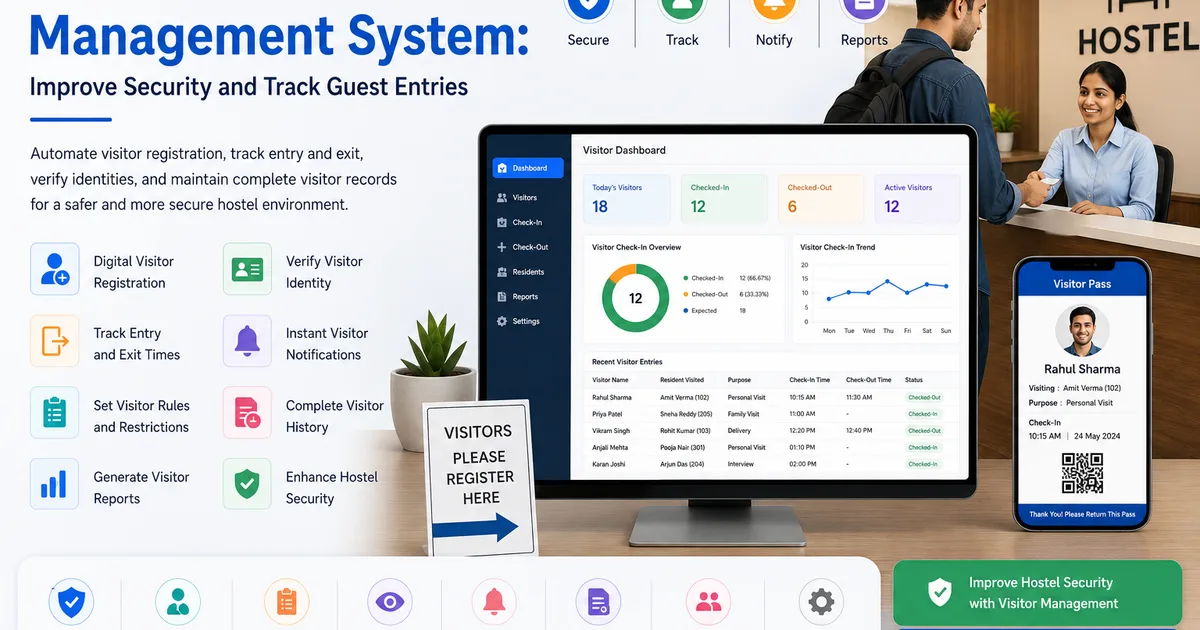
- hostel visitor management — Build controlled guest-entry and security records.
- hostel room allocation — Plan bed capacity, occupancy and transfers digitally.
- PG management guide — Connect housing capacity with safety and daily operations.
Official sources and important disclaimer
- Government of Odisha Industries Department resolution and turnkey tender listing — includes the 25 June 2026 tender listing for development of the Women Worker's Hostel in Kalibeti Industrial Area, Khordha.
- Odisha Cabinet decisions portal — records approval of the Kalibeti women workers' hostel turnkey tender.
Project-status note: Cost, bed capacity, completion schedule, contractors and operating model are planned or announced figures and may change during tendering and execution. Readers should consult the latest Odisha Government and Industries Department documents for current project status.

About the Author
Shilpi Shukla
Shilpi Shukla has 7 years of experience in rental property, hostel, PG, and tenant management. She shares practical insights to help property owners simplify operations, improve tenant experiences, and grow their rental business with RentTenant.